Award-winning picture case study

Do Demons Play Doom, Too?

A gothic 3D illustration about retro PC obsession, demoscene nostalgia, and one demon's late-night gaming ritual.

What if the demon was not the enemy in the game, but the player?

Competition Instanssi
Category Graphics Competition
Result 1st Place

Overview

A theatrical scene where the monster becomes the player.

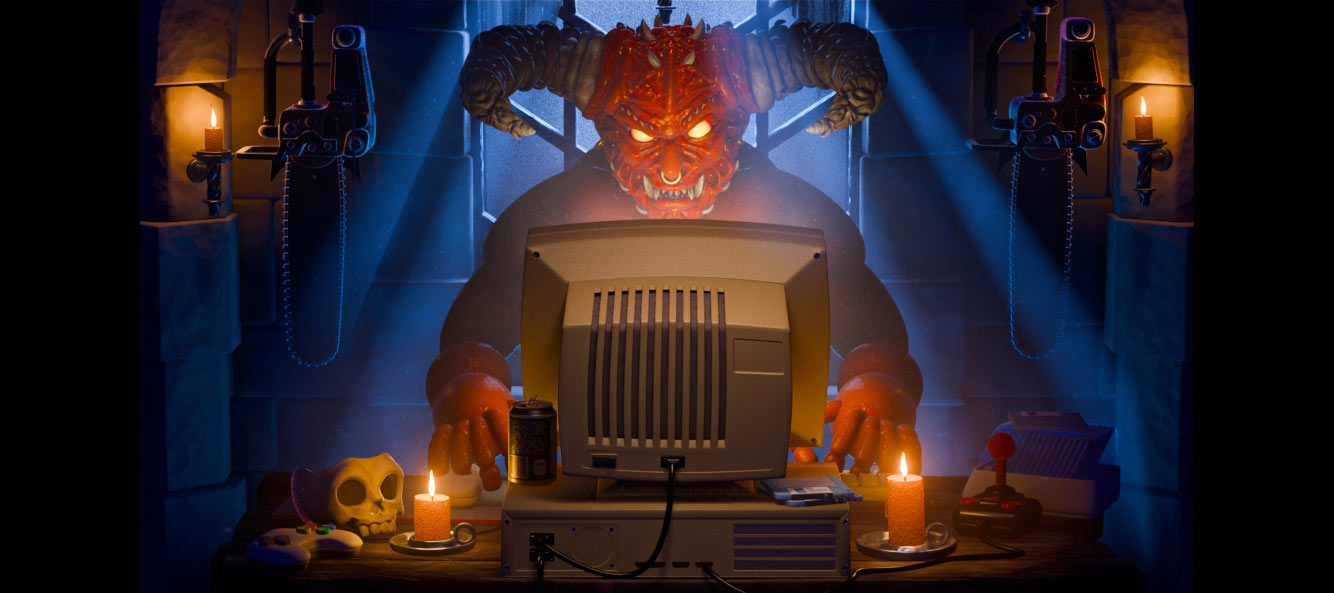
Do Demons Play Doom, Too? is a cinematic 3D illustration created for the graphics competition at Instanssi. The piece won 1st place.

The final artwork depicts a horned demon sitting in a gothic stone chamber, lit by moonlight, candles, and the warm glow of a CRT monitor. Around him are retro computer objects, floppy disks, a joystick, candles, and ritual-like clutter.

Project details

  • Type: 3D illustration and demoscene competition artwork.
  • Tools: Blender, Photoshop, and MakeHuman.
  • Role: concept, scene creation, lighting, rendering, and post-processing.
  • Theme: gothic horror, retro PC culture, and demoscene nostalgia.
Goals

Strong enough for the big screen, detailed enough for a second look.

The main goal was to create an image that would work well in a demoparty graphics competition: immediate, memorable, atmospheric, and rich enough to reward closer inspection.

I also wanted the image to feel both epic and intimate. The room suggests a large gothic chamber, but the emotional focus remains on one private moment: a demon alone at a computer, completely absorbed by the game.

Concept development

A simple joke-like inversion became the hook.

The early idea was built around the title Demo(n)party, with a demon-like figure behind an old CRT monitor. As the idea developed, the connection to classic DOOM became more explicit.

Instead of a player fighting demons, the demon becomes the player. That inversion gave the picture a clearer hook and a slightly humorous, philosophical tone.

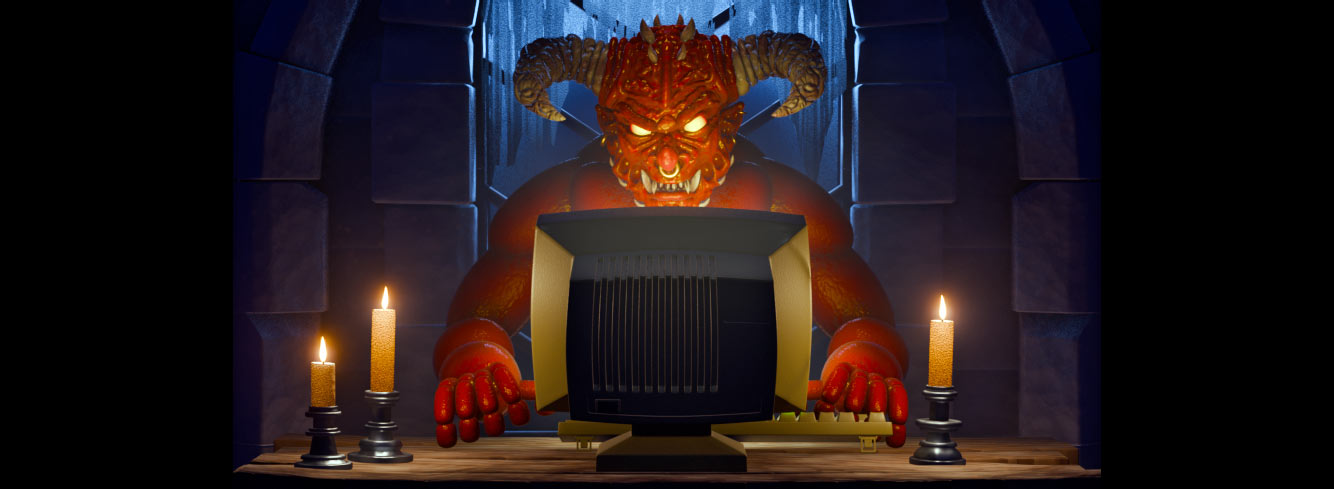
Early concept render with a demon head and CRT in a dark void
Demon, CRT, void background

Visual direction

A gothic-tech hybrid where the CRT becomes an altar.

Gothic room blocking or lighting test for the demon illustration
Room
  • A demonic character in a castle or cathedral-like stone interior.
  • Cold moonlight through an arched opening.
  • Candles, ritual objects, and retro PC props.
  • A CRT monitor as the main emotional light source.

A demon in a gothic room is expected. A demon using a CRT computer is the twist.

Composition

Central symmetry gives the scene a ritual quality.

The demon is placed directly in front of the arched window, with the monitor and props arranged around him. This symmetry makes the piece easy to read quickly in a competition setting.

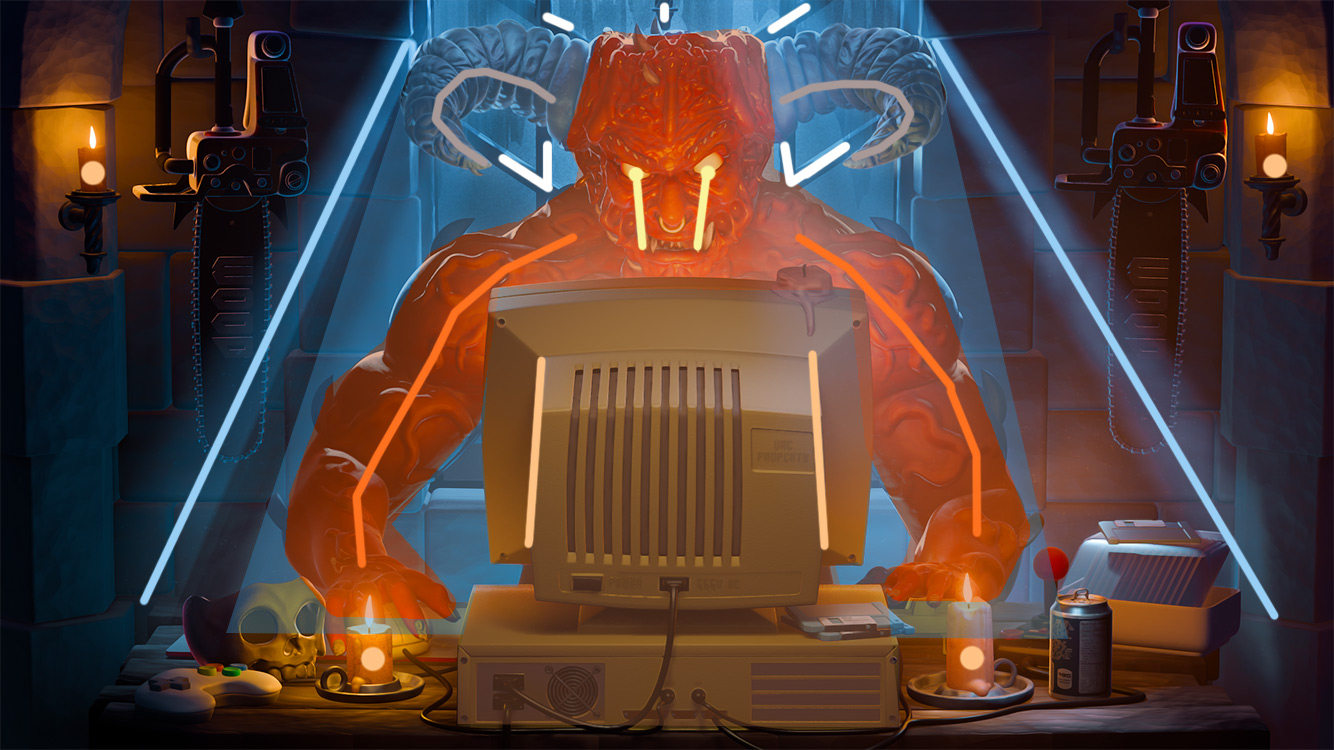
  1. Demon face and glowing eyes.
  2. CRT monitor glow.
  3. Horns and silhouette.
  4. Hands, torso, and desk objects.
  5. Window, moonbeams, candles, and stone background.
Composition breakdown showing the demon illustration's focal hierarchy
Focal hierarchy

Lighting strategy

Cold moonlight, warm CRT glow, and candle accents.

Lighting pass comparison for the demon illustration
Moonlight background separation

The blue moonlight creates scale and separation from the background. The warm CRT glow provides the emotional light and gives the demon a horror-like upward illumination. Candlelight adds ritual accents and bridges the fantasy and retro-computing elements.

The final palette intentionally echoes the feeling of hot yellows and reds against deep blues without directly copying the source reference.

Character development

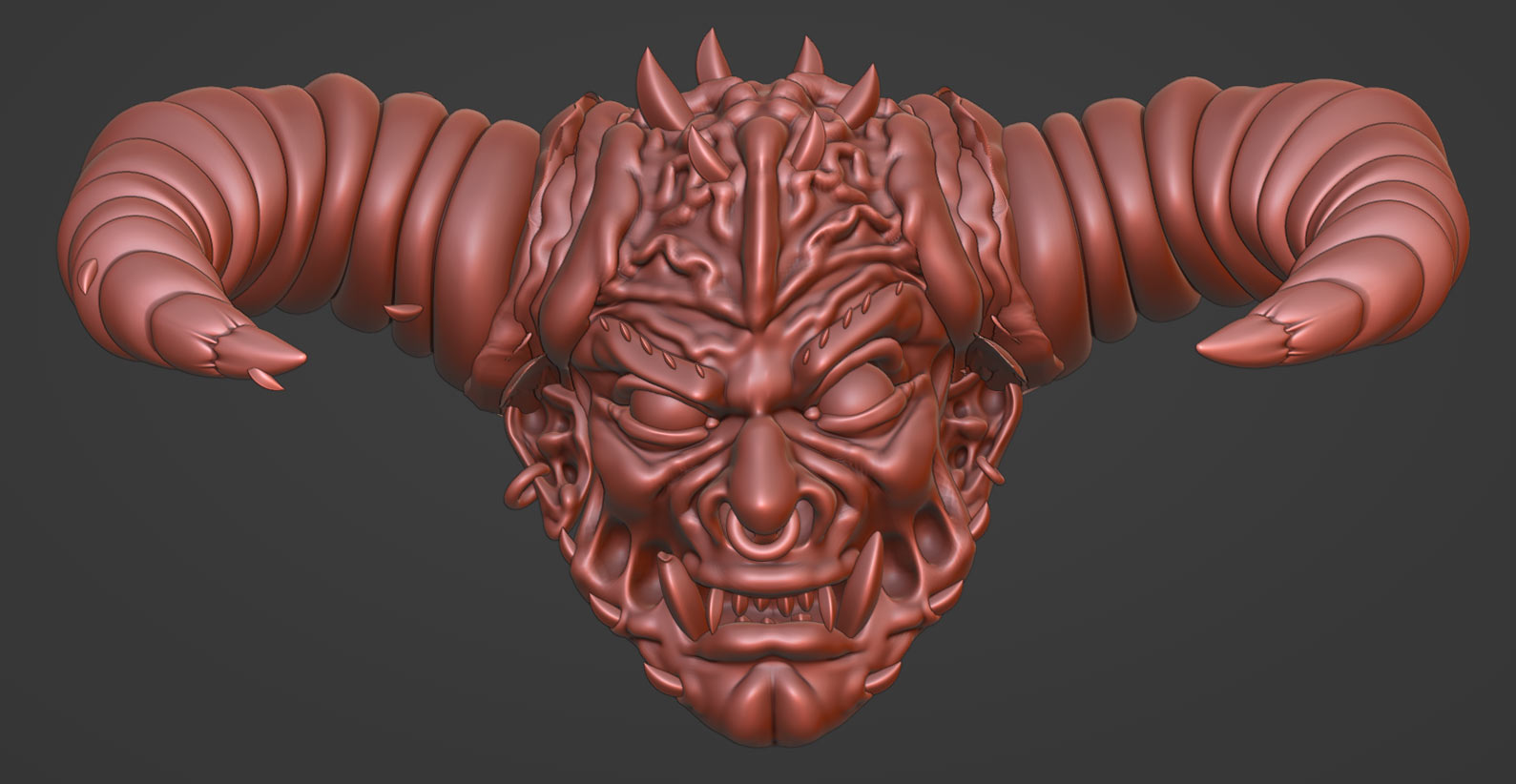
The head carried the concept from the beginning.

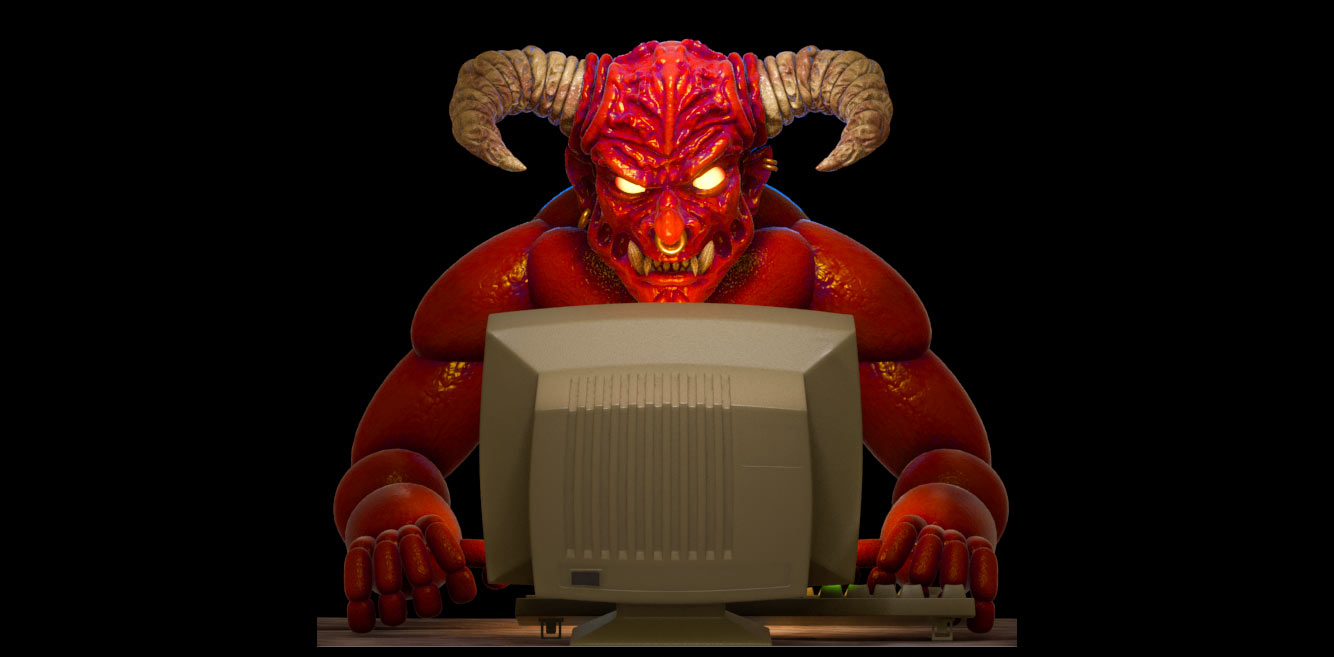
The demon's head was the most important asset in the image. It needed to feel aggressive, intelligent, and slightly absurd at the same time. Later, arms, hands, a keyboard, and body language were added so the character was no longer simply present. He was doing something.

The torso was replaced late in production with help from MakeHuman, improving the silhouette and material response without losing time to unnecessary anatomical polish.

Demon head close-up, body placeholder, and final torso comparison
Head close-up

Environment & props

A gaming setup treated like an occult altar.

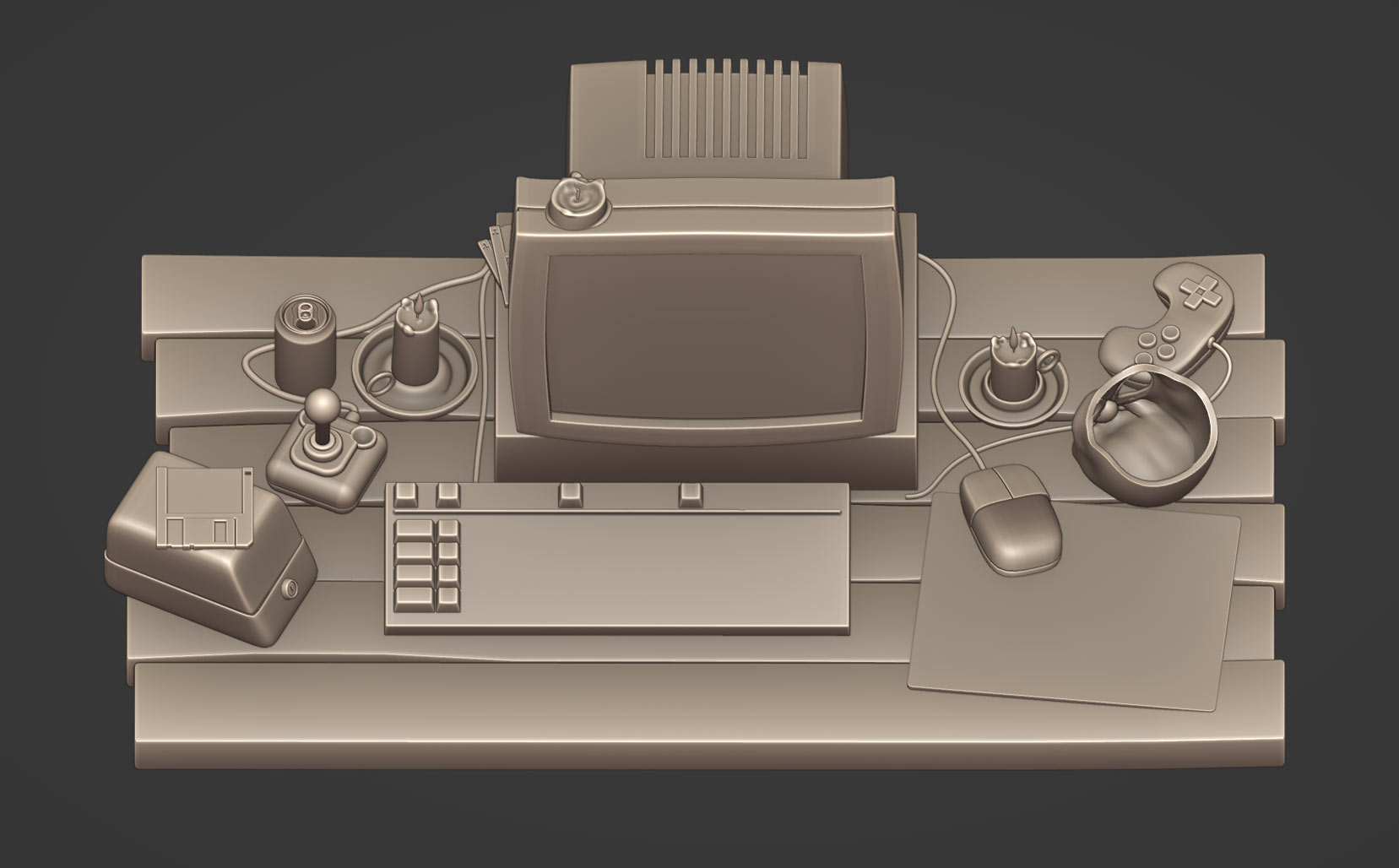
Prop detail collage showing CRT, joystick, floppy disks, skull, and candles
Props

The environment used a mix of new elements and kitbashed assets from older scenes. I focused on details that immediately improved mood and storytelling: CRT monitor, keyboard, joystick, floppy disks, skull, candles, stone architecture, and an arched window.

The desk became a bridge between two worlds: gaming setup and occult altar.

Production constraints

A deadline piece shaped by pragmatic choices.

Some assets were created specifically for the scene, while others were adapted from older projects. This kitbashing approach made it possible to quickly increase detail and atmosphere without rebuilding everything from scratch.

Lighting, color grading, material adjustments, and Photoshop post-processing helped bring the mixed elements together into one coherent image.

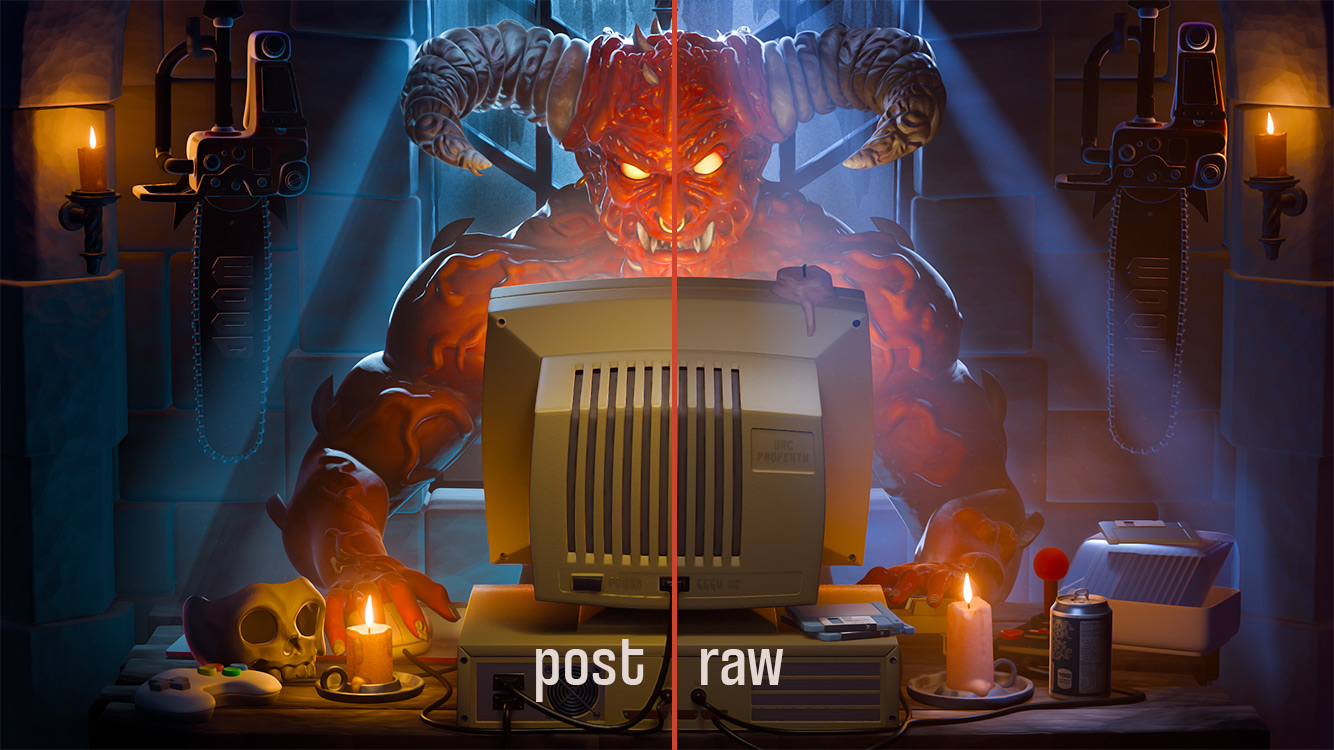
Raw Blender render versus Photoshop-treated final image
Raw Blender render vs. Photoshop-treated final.

Photoshop post-processing

Pushing the render toward a finished illustration.

The post-processing pass strengthened the cohesion between eye glow and CRT glow, improved contrast around the face, enhanced the blue and orange color relationship, and added atmosphere and depth.

I tried to avoid over-processing the image. The goal was not to hide the 3D render, but to make the lighting and mood feel more intentional.

Competition context

A demoparty image with instant impact and secondary detail.

The image was submitted to the graphics competition at Instanssi and won 1st place. The result felt especially meaningful because the event also had a strong year for demo and intro entries.

For a demoparty audience, the piece worked because it combined a strong central character, a recognizable retro gaming reference, dramatic lighting, a humorous concept, and dense detail without losing the focal point.

What I learned

A strong concept can survive production shortcuts.